About MDPE Blue Pipe
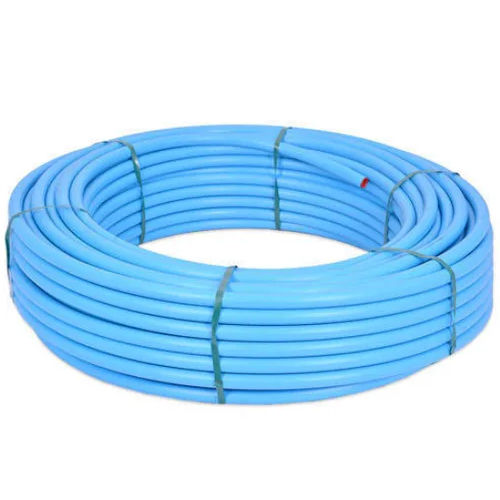
MDPE Blue Pipe is a type of plastic piping commonly used for underground water supply and distribution systems. This is made from medium-density polyethylene, which is a durable thermoplastic material known for its strength, flexibility, and resistance to corrosion, chemicals, and abrasion. It is suitable for both residential and commercial applications and is often preferred for its durability, flexibility, and ease of installation. MDPE Blue Pipe is known for factors such as pipe size, pressure rating, material quality, and compliance with relevant standards and regulations should be considered to ensure the safety, reliability, and longevity of the system.
| Brand |
Rudra Plast |
| Material |
MDPE |
| Size/Diameter |
20MM { 1/2" } |
| Length of Pipe |
300m |
| Thickness |
3 mm |
| Pipe Joint type |
Ring fit/ Push fit |
| Color |
BLUE |
| Country of Origin |
Made in India |
Exceptional Durability and ResistanceBuilt to last in harsh environments, MDPE Blue Pipes are highly resistant to corrosion, chemicals, and UV radiation. Their robust design prevents leaks and maintains structural integrity, ensuring reliable service even in challenging weather and chemical conditions. With tolerance up to 1 mm and burst pressure as high as 20 bar, these pipes deliver enduring quality for essential water and fluid transport systems.
Flexible Applications for Modern NeedsEngineered for versatility, these pipes suit a broad spectrum of uses such as municipal water delivery, agricultural irrigation, and residential or industrial plumbing. Available in various lengths, diameters, and thicknesses, they offer installation flexibility whether laid above ground or buried. Standard-compliant and easy to connect using butt welding or compression fittings, they seamlessly fit into both new projects and repair work.
FAQ's of MDPE Blue Pipe:
Q: How is the MDPE Blue Pipe typically installed and connected?
A: The MDPE Blue Pipe can be installed using either butt welded or compression fittings, depending on the project requirements. Its smooth surface and high flexibility make it straightforward to handle and lay, whether using straight lengths or coils. Both installation methods ensure a secure, leak-proof connection for long-term reliability.
Q: What makes this MDPE Blue Pipe suitable for water supply and plumbing applications?
A: This pipe's excellence in chemical and corrosion resistance, combined with its leak-proof design and smooth internal surface, reduces the risk of blockages and contamination. Its UV-resistant composition and ability to withstand pressures up to 20 bar make it ideal for water supply systems, plumbing, and irrigation in both urban and rural settings.
Q: When should I use PE80 or PE100 material grades for my project?
A: PE80 and PE100 are both durable and reliable, but PE100 offers higher strength and is typically chosen for high-pressure applications (up to PN 10 and 20 bar burst), while PE80 is suitable for lower pressure needs. Selection depends on the operational demands, expected pressure, and required safety margins of your installation.
Q: Where can the MDPE Blue Pipe be used, considering environmental conditions?
A: This pipe can be used both above and below ground in environments ranging from -20C to +60C. Its UV resistance makes it suitable for outdoor exposure, while its flexibility allows for easy routing around obstacles in agricultural, municipal, or industrial locations.
Q: What is the standard compliance of this MDPE pipe and why is it important?
A: The pipe conforms to IS 14333:1996 and ISO 4427 standards, ensuring it meets quality, performance and safety benchmarks recognized domestically and internationally. This compliance assures users of its reliability and suitability for regulated water supply infrastructures.
Q: How does the high flexibility of MDPE Blue Pipe benefit installation and use?
A: High flexibility enables the pipe to be coiled in lengths up to 200m, covering extended runs with fewer joints. It also facilitates installation in uneven terrain or confined spaces, reduces the risk of cracking during ground movement, and lowers labor and material costs.
 Send Inquiry


 Send Inquiry

 Send Inquiry


